Lobby Bar Strategies That Actually Work
Stop losing hotel guests at the lobby bar. Fix slow service, wasted inventory, and missed revenue with practical strategies that work during real rushes.
The Real Cost of Your Empty Lobby Bar
Lobby Bar Strategies That Actually Work begin at 4:47pm on a Thursday. You watch three separate groups of hotel guests walk into your lobby, look at the bar, and then walk right back out the front door to find a drink somewhere else. Your bartender is polishing glassware. Your server is rolling silverware. The space is clean, quiet, and completely empty. The revenue you just lost walked out the door in under 60 seconds because no one wants to wait 15 minutes for a drink when they're heading out for dinner.
Your lobby bar should be making money from 4-7pm every day. This is prime time. Guests are checking in, settling into their rooms, and deciding where to spend their evening and their money. The problem isn't your location - it's your service speed. A guest standing in a lobby is a guest in transition. They have not committed to sitting down. They are making a split-second decision: "Can I get a drink here quickly, or should I go somewhere else?" If the answer isn't an immediate "yes," you lose.
This connects directly to managing the entire guest journey under one roof, a topic we break down in Room Service That Actually Works, which covers practical fixes for cold food, long waits, and wasted labor across hotel dining operations.
The cost isn't just the $14 cocktail you didn't sell. It's the entire evening's spend that guest takes to a competitor's restaurant. It's the bad review that mentions "the dead bar in the lobby." It's the lost opportunity to turn a one-time guest into a regular who knows they can always get a great, fast drink at your hotel. Your empty lobby bar is a silent leak in your profitability, and it happens every single afternoon.
The 3-Minute Drink Rule
The fix starts with one non-negotiable standard. The Rule: Every drink must reach the guest within three minutes from order to delivery. This isn't about fancy cocktails - it's about system design. The hard truth is that your signature cocktail program is killing your revenue if drinks take longer than three minutes to make. Guests don't care about your house-made bitters when they're thirsty and in a hurry.
Start by throwing out your 12-item cocktail menu. Build a two-drink menu that anyone can make in under 90 seconds. One should be spirit-forward and simple, like a perfect Manhattan or a Gin & Tonic with a premium tonic. The other should be a refreshing crowd-pleaser, like a Paloma or a Moscow Mule. Train every bartender, server, and manager to make these two drinks perfectly every single time. Consistency beats complexity at the lobby bar.
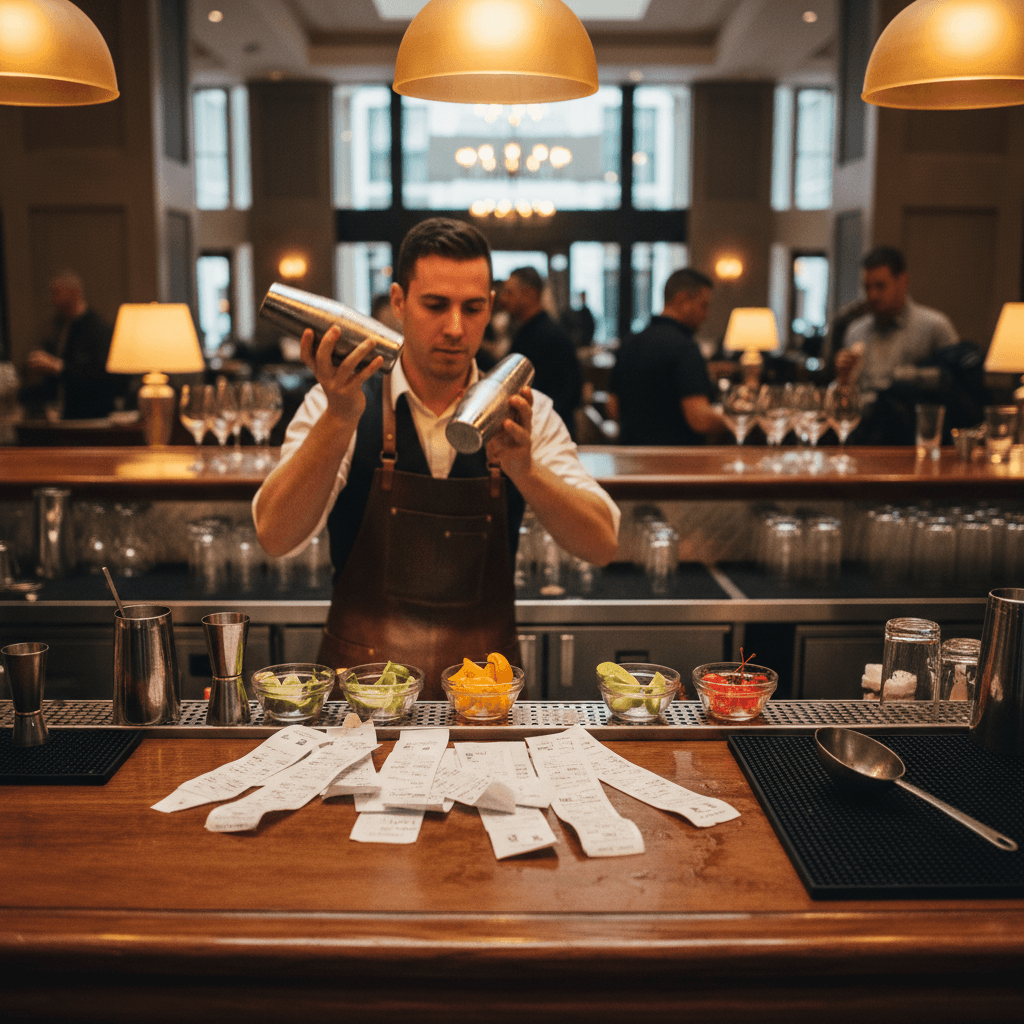
Your prep station must support this speed. Use batch prepped ingredients that live in squeeze bottles right at the well. Pre-batch your Manhattan mix. Have fresh lime juice and simple syrup ready to go. Store garnishes - lemon twists, lime wedges - in small containers within arm's reach. Your goal is zero steps between receiving an order and starting the build.
Your servers are your secret weapon for maintaining the three-minute rule during a rush. They should know these two drinks by heart and be able to make them when the bartender is three-deep at the rail. This requires cross-training and trust. A server who can confidently build a perfect Manhattan while the bartender handles more complex drink orders turns one production point into two. This is how you handle sudden rushes without breaking your service promise.
When Speed Creates Chaos
You get the three-minute rule working perfectly. Suddenly you're selling drinks faster than ever before. Congratulations - you've created a new problem. Now you're running out of clean rocks glasses by 6pm because your dish machine can't keep up with the new volume. Your garnish station looks like a crime scene of lime pulp and spilled simple syrup because no one has 30 seconds to tidy up between orders.
Your bartender is making drinks so fast they're forgetting to ring half of them into the POS system before handing them off. You're making more money but losing more through waste, comps, and inventory shrinkage. The bottleneck has simply shifted from service speed to everything else - inventory tracking, glassware rotation, cash handling, and side work.
This is where most operations fail. They solve the initial speed problem but don't build systems to support the new volume. You need parallel workflows that keep pace with production.
Start with glassware. Calculate your glass-to-guest ratio based on peak hour sales from last week, then double it for safety. Have two full sets clean and ready at 4:45pm every day. Implement a "dirty glass drop" station with bus tubs clearly labeled for different glass types so servers can help clear tables without sorting later.
For inventory, move to par levels based on actual sales data, not guesswork. If you sold 42 Manhattans last Thursday between 5-7pm, prep for 50 this Thursday - not 20 or 100. Prep exact quantities of garnishes in small batches throughout the shift instead of one giant container at opening that gets warm and soggy by 7pm.
The most critical fix is the cash handling rhythm. Implement a "ring then make" policy that servers and bartenders follow without exception. The POS button must be pressed before any bottle is opened or any ice hits the glass. This creates an immediate electronic record of every sale and ties directly into your inventory counts at the end of the night.
From Busy Bar to Profitable Business
The lobby bar that works isn't just fast - it's predictable. You know exactly how many drinks you'll sell between 5-6pm on a Thursday because you tracked it last week and the week before that. You have the right glassware cleaned and ready at 4:45pm based on that number plus a 20% buffer for walk-ins. Your garnishes are prepped in exact quantities that match last week's sales data plus ten percent.
This is where systems replace guesswork and busy becomes profitable.
Track what actually sells during each hour of operation using your POS reports or even a simple pen-and-paper tally sheet during the shift. Look for patterns: Do you sell more wine before dinner and more cocktails after? Does business dip at 6:30pm when guests leave for dinner reservations? This data drives every decision from staffing to prep.
Build prep lists that match reality, not recipes from corporate headquarters or what you think should sell. If you consistently sell three bottles of Sauvignon Blanc during happy hour but only one bottle of Cabernet, adjust your wine cooler accordingly next week. Stop prepping mint for Mojitos if you only sell two per week - buy fresh mint as needed instead of watching it wilt in your cooler.
Train your team to see the lobby bar not as an amenity but as a revenue center that deserves the same attention as your restaurant kitchen or banquet department. This mindset shift changes everything from how they stock napkins to how they interact with guests waiting for their room key.
The next step is connecting your lobby bar operations to your hotel's broader dining strategy - including room service and restaurant operations - so inventory, staffing, and guest experience work together instead of competing for attention.
These manual fixes require discipline and consistent follow-through from management every single shift. Modern digital tools can help automate this discipline by tracking real-time sales against inventory par levels or alerting managers when glassware counts dip below critical thresholds during peak hours. The right technology handles the repetitive counting and alerting so your team can focus on service execution.
Taking the Next Step
Shifting your lobby bar from an empty space to a predictable profit center comes down to applying simple rules with absolute consistency. The logic is clear: fast service captures walk-in business, predictable systems prevent waste, and accurate tracking turns activity into profit. These strategies work because they're built around what guests actually do during real hotel stays.
Measure your current drink delivery time tomorrow afternoon. If it's over three minutes, start by simplifying your menu to just two perfect drinks. Track what sells this week to build next week's prep list. When you're ready to automate that tracking and connect it across all your dining outlets, view our pricing for options that scale with your volume. You can start a free trial today to see how real-time data turns your busiest hours into your most profitable ones