How to Start a Restaurant Catering Program
Learn how to launch catering without disrupting your restaurant operations. Practical steps for menus, pricing, and execution that actually work.
When Your Kitchen Can't Handle One More Thing
Starting a catering program feels like the right move until Friday at 11:45 AM. Your line is already slammed with lunch covers. The printer is spitting tickets. Your expo is calling three orders at once. Then you remember the fifty office lunches that need to be boxed, labeled, and loaded by noon. The server who took that order forgot to write down the three gluten-free requests. Now you have a line cook remaking sandwiches while the entire lunch service grinds to a halt.
This is the chaos of trying to run catering from your regular line. You are not adding a new revenue stream. You are creating a second restaurant inside your first one, with no separate staff, space, or systems. The manual method of writing catering orders on paper tickets creates guaranteed mistakes when you scale beyond five events per week. Your kitchen can handle the food. It cannot handle the logistics on top of a full service.
You know the problem. Here's why your current fix fails.
Catering Isn't Just Bigger Portions
This is the hard truth your menu cannot ignore: your most popular restaurant dishes will fail as catering items. What holds on a plate for three minutes under a heat lamp falls apart in a chafing dish for three hours. The seared salmon that sells dinner tickets turns to dry flakes. The delicate salad wilts into a soggy mess. Catering food must travel, hold temperature, and look good after thirty minutes in the back of a car.
The Rule: If it needs last-minute assembly or precise plating, it does not belong on your catering menu.
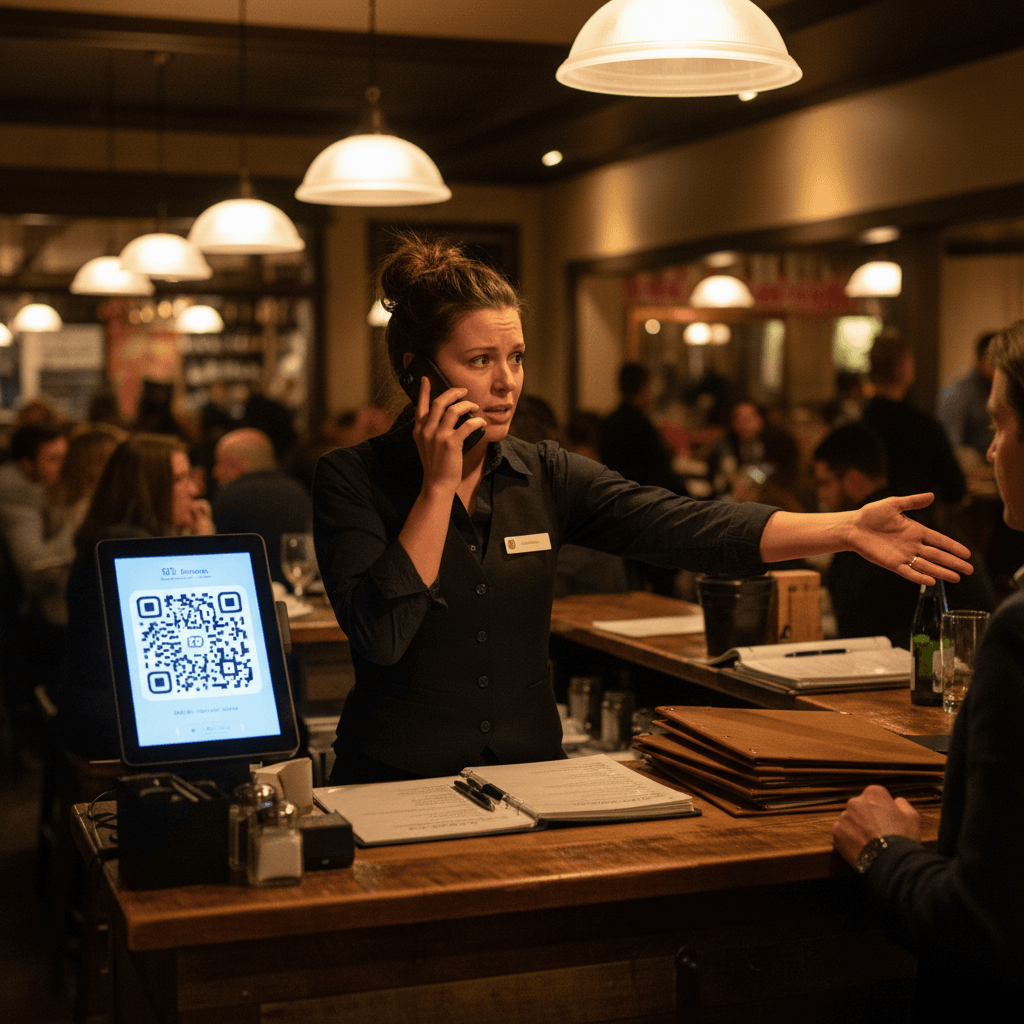
Your existing ordering system is the second point of failure. Taking orders over the phone and scribbling them on a ticket works for a party of six. It collapses with a corporate order for sixty with five dietary modifications. Misspelled names, wrong pickup times, and unrecorded allergies are not mistakes. They are the certain outcome of a system built for one table, not ten events.
That's the trap. This is how you escape it.
The Minimum Viable Catering Menu
Start with three bulletproof items, not twenty. Your goal is not variety. Your goal is execution you can deliver perfectly every single time, even when your dining room is full.
Build your program around what travels well, holds temperature, and requires zero last-minute assembly. Think hearty pasta bakes, braised meats in their own sauce, roasted vegetable medleys, and grain salads dressed in oil, not mayonnaise. These items improve with time and are forgiving of temperature swings.
Now, the contrarian opinion that saves your margins: charge more for delivery than for food.
Your time driving across town has a real cost that most restaurants ignore. Calculate the round-trip drive time, plus loading and unloading. Multiply that by the hourly wage of your driver (or your own time as owner). That number is your minimum delivery fee. If an order does not cover that fee plus your food cost, you are losing money by saying yes.
The Friday Morning Drill That Prevents Saturday Night Disasters
Your expo station becomes your catering quarterback. Forty-eight hours before any event, run this specific checklist.
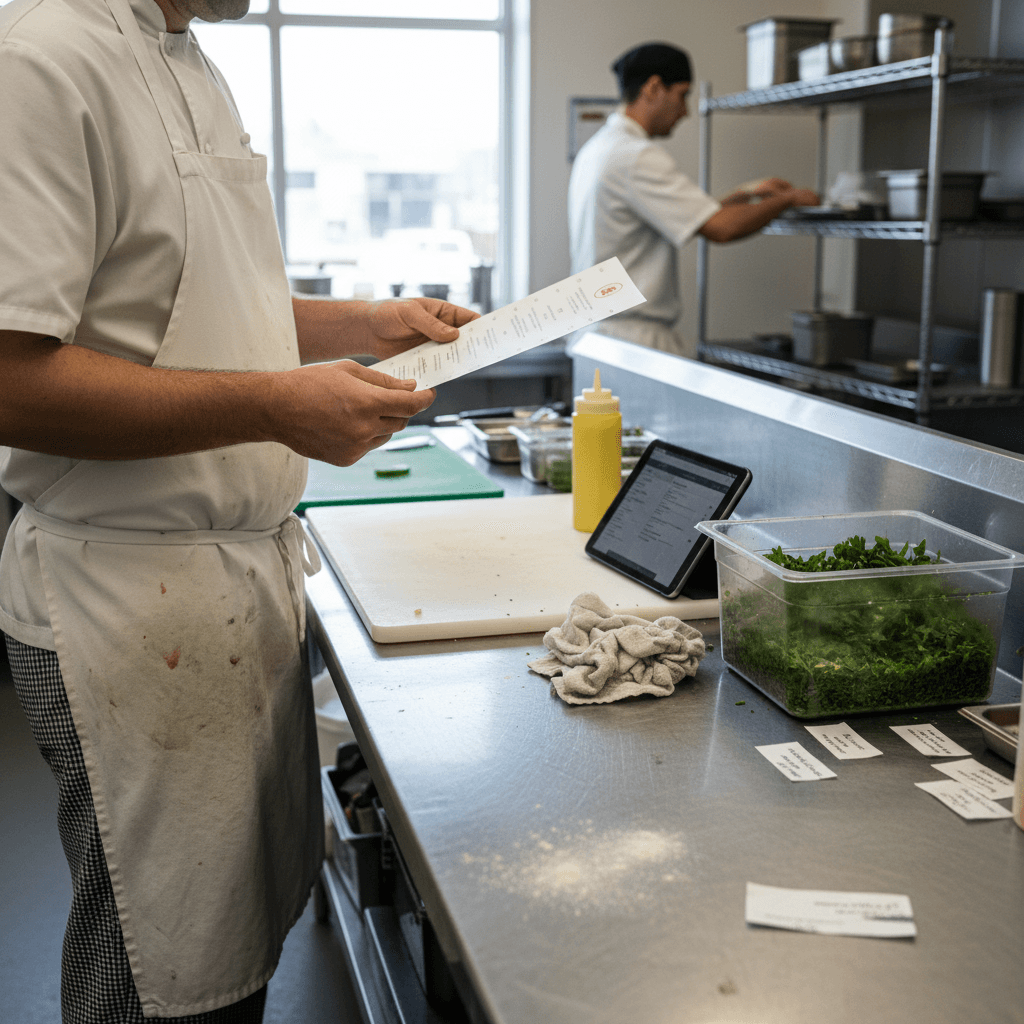
First, print every single detail on one sheet of paper - the catering run sheet. This is not the invoice. This is the operational bible for that order. It lists contact name, phone number, delivery address with gate codes, setup time, service time, pickup time, exact item counts with allergies highlighted in yellow, and instructions for where to leave empty chafers.
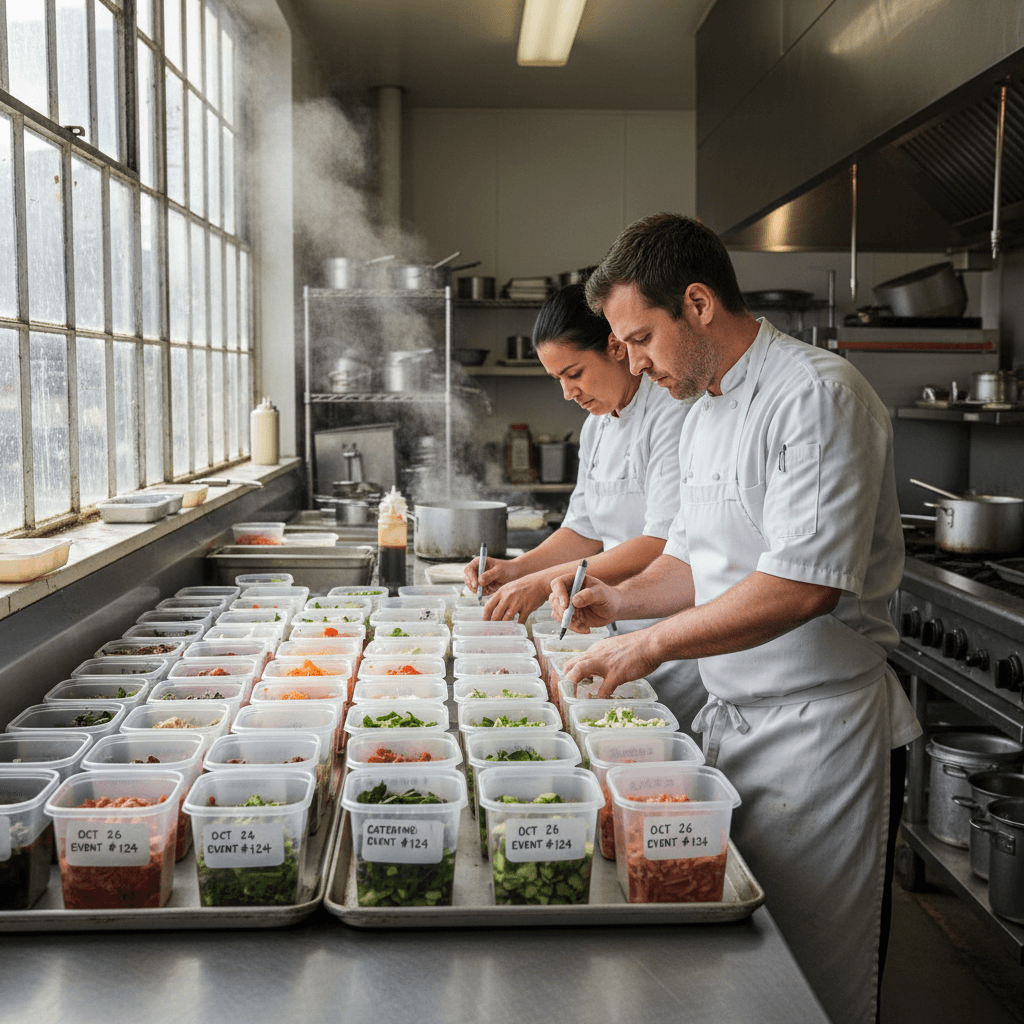
Second, prep everything that can be prepped. Portion proteins into hotel pans. Mix dressings separately in squeeze bottles. Label every container with the event name and contents.
Third, conduct a five-minute briefing with every staff member touching that order - from the cook who packs it to the driver who delivers it. Show them the run sheet. Point out the allergies.
Train your servers to ask two questions when booking any catering order: "What is the exact drop-off location?" and "Who is the single point of contact on-site with their cell phone number?" These two answers prevent eighty percent of day-of delivery problems.
Your First Month: Three Events, Not Thirty
Your goal for month one is three flawless events, not thirty chaotic ones. This requires learning how to say no to bad-fit orders without losing customers.
A bad-fit order has one or more of these traits: it's for an item not on your core three-item menu; it requires delivery during your peak service hours; or the budget is so low it won't cover your real costs including delivery and labor.
The simple math shows when catering actually makes money versus just creating work. Take your total revenue from an event. Subtract your food cost (typically 28-35%). Subtract your allocated labor cost for prep, pack, and delivery time. Subtract your delivery fee if you didn't charge enough to cover actual vehicle and driver cost. What remains is your contribution margin - the money left to cover fixed costs like rent and utilities. If that number is negative or barely positive, you are working for free.
What to measure from day one is not just total revenue. Measure your error rate per event (forgotten items, wrong addresses). Measure the exact labor minutes spent per dollar of catering revenue. Measure which of your three menu items has the best hold quality and fewest complaints. This data tells you what to fix and what to double down on.
Taking the Next Step
The shift from chaotic add-on to profitable program is operational, not magical. It requires separating catering logistics from your daily service flow and building systems that prevent errors before they happen.
Stop letting paper tickets and verbal orders dictate your success. A structured approach turns unpredictable chaos into scheduled revenue. To see how dedicated tools can streamline this separation from day one, view our pricing for plans built around kitchen capacity, or start a free trial to map your first three events without disrupting Friday night service