Essential Kitchen Equipment That Actually Works
Stop wasting money on fancy gear you'll never use. This essential kitchen equipment list comes from 15 years of fixing opening day mistakes.
When Fancy Equipment Becomes Expensive Decor
It's Friday night, 7:45 PM. Your expo is calling three orders at once while your line cook searches for the right saute pan. The one he grabs has a warped bottom - the oil pools to one side, leaving half the chicken to stick and burn. He curses, scraps the ticket, and starts over. You just lost eight minutes during peak rush, plus the cost of the wasted protein. Essential Kitchen Equipment That Actually Works isn't about having the most impressive gear. It's about having tools that don't fail when you need them most.
Opening a restaurant means every dollar counts. I've seen owners blow $10,000 on a combi oven they use twice a week while their line cooks fight over dull knives. The shiny catalog gear looks impressive during tours but collects dust during Friday night rush. Your equipment list should solve problems, not create them. This thinking connects directly to the systematic approach in The Restaurant Opening Checklist That Actually Works, which builds your entire operation from the ground up to avoid these exact failures.
The 20 Tools That Run Every Successful Kitchen
Here's the hard truth - commercial grade doesn't always mean better for your operation. A $300 commercial blender might break faster than a $150 heavy-duty consumer model if you're only making three smoothies a day. Start with these twenty core pieces every kitchen needs open to close:
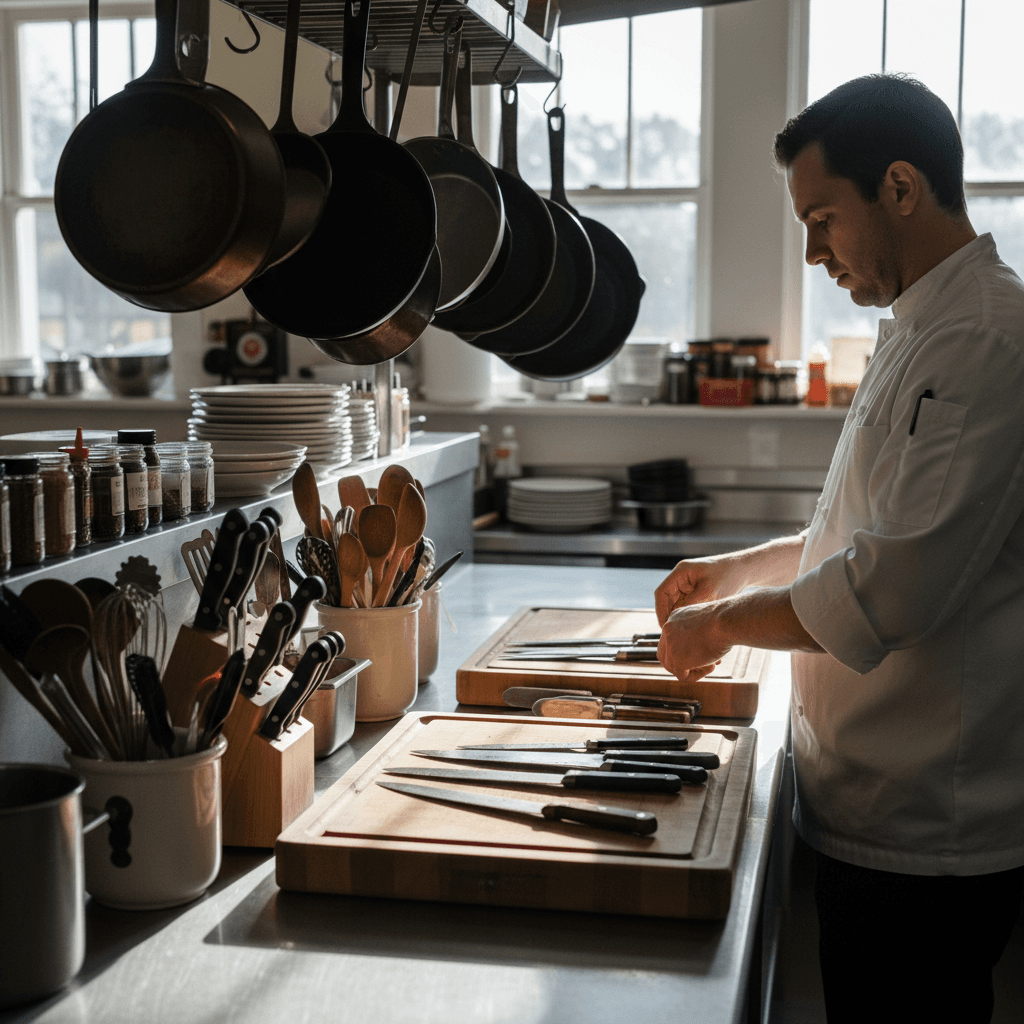
- The workhorse knife set (chef's, paring, serrated)
- Heavy-duty cutting boards that won't slide
- Commercial-grade sheet pans that don't warp
- Saute pans with proper heat distribution
- Stock pots that won't scorch your sauces
- Hotel pans that fit your cooler shelves
- Digital thermometers servers can actually read
- Bench scrapers for clean work surfaces
- Tongs that don't pinch fingers
- Whisks that actually incorporate
- Spatulas that survive grill heat
- Measuring cups with clear markings
- Mixing bowls that stack neatly
- Colanders that drain properly
- Peelers that stay sharp
- Can openers that work every time
- Timers line cooks will actually use
- Scale for consistent portioning
- Chinois for smooth purees
- Microplane for finishing touches
Each item earns its place by being used multiple times daily. If something sits unused for three days straight, it's taking space from what you actually need.
The Rule: Every piece of equipment must solve a specific problem that occurs during service, not before or after.
That digital thermometer isn't for checking inventory at 3 PM. It's for your server to verify a medium-rare steak at table seven when the guest sends it back during Saturday dinner rush. Clear markings matter because dim kitchen lighting and hurried hands create mistakes.
Why Your Equipment List Keeps Growing
The manual approach works until your kitchen hits its stride. Suddenly you realize your four-burner range can't keep up with Saturday dinner tickets. Your single convection oven bakes bread beautifully but roasts vegetables too slowly for banquet service. You're constantly borrowing equipment from other stations or running to restaurant supply stores mid-shift.
The real bottleneck isn't money - it's space and workflow. Every new piece of equipment needs cleaning, maintenance, and storage space it might not have. That beautiful pasta maker becomes a dust collector when your line cook needs the counter space for plating during rush hour.
I watched a kitchen add a $2,500 salamander broiler because their menu featured three grilled items. They used it twice a week at most. Meanwhile, their prep team struggled with two dull vegetable peelers every morning, adding fifteen minutes to opening prep time across three people.
Equipment creates motion in your kitchen - either efficient motion or wasted motion.
A warped sheet pan means your cook bends to rotate items halfway through baking instead of trusting even heat distribution. Dull knives mean your prep cook applies more pressure, tires faster, and produces inconsistent cuts that cook unevenly.
Building a Kitchen That Lasts
Your equipment should grow with your business, not hold it back from day one. Start with what you absolutely need to open successfully, then add specialty items as menu items prove themselves profitable.
The most successful kitchens I've worked in had one thing in common - every piece of equipment had a specific job and got used daily. Nothing was bought because it looked impressive in a catalog.
Think about your first month's menu versus your ideal menu six months from now. Buy for today's reality with an eye on tomorrow's growth.
Here's how this plays out on the floor: Your new restaurant opens with a simple burger concept. You buy two heavy-duty flat top grills because seventy percent of your tickets involve burgers or grilled sandwiches.
Six months later, you add weekend brunch with pancakes and French toast. Now you need a dedicated griddle station or additional flat top space during Saturday morning service.
But if you'd bought that extra equipment before proving brunch would sell? You'd have wasted capital and valuable kitchen real estate for months.
Track what equipment gets borrowed between stations during busy periods.
If your saute station constantly takes tongs from the grill station during dinner rush, you need another pair of tongs at saute - not fancier tongs, just more reliable ones in the right place.
If prep borrows sheet pans from pastry every morning, you're short on basic pans, not specialty equipment.
This manual tracking requires discipline and observation during actual service hours.
Modern kitchen display systems can automate this tracking by showing which stations wait longest for equipment during peak times.
Digital inventory tools help you monitor what gets used versus what collects dust, taking the guesswork out of future purchases.
Taking the Next Step
Essential kitchen equipment works when it disappears into the flow of service - when cooks reach for tools without thinking because they're always there and always reliable.
The logic is clear: solve today's actual problems with today's actual budget, then grow systematically as your menu proves itself.
Your next shift will show you exactly where your current equipment fails - watch where motion slows down or frustration builds during peak hours.
When you're ready to move from manual tracking to systematic improvement, view our pricing for tools that help identify these bottlenecks automatically or start a free trial to see how digital workflow analysis can inform smarter equipment purchases before you spend another dollar