Barista Workflow Tips That Actually Work
Stop wasting time between orders. Learn the exact station setup and movement patterns that cut 30 seconds off every drink during morning rush.
The 30-Second Gap Between Drinks
Barista workflow tips that actually work start by fixing the silent profit leak happening between every single drink. Every time a barista hesitates between orders, you lose money. That moment of looking for the next ticket, searching for clean pitchers, or deciding which drink to make next adds up to minutes per hour. During a 3-hour morning rush with 100 drinks, those gaps could cost you an extra staff member or force customers to wait longer than necessary.
Picture your busiest Saturday morning. The line is out the door. Your barista just finished a latte, wipes down the steam wand, and then... pauses. They glance at the ticket printer, scan the counter for the next cup, check if they need more milk. That's 30 seconds gone. Multiply that by every drink during peak, and you've lost 50 minutes of productive time in a single rush. This isn't about working harder - it's about eliminating dead space in the workflow.
The Rule: No barista should ever finish a drink without knowing exactly what comes next. This requires a system that connects order flow to physical movement without thinking. For the complete mathematics behind how these small time savings translate into real profit margins, see our guide on The Coffee Shop That Actually Makes Money. That post breaks down how eliminating wasted seconds directly impacts your bottom line beyond just faster service.
The Station Setup That Cuts Movement in Half
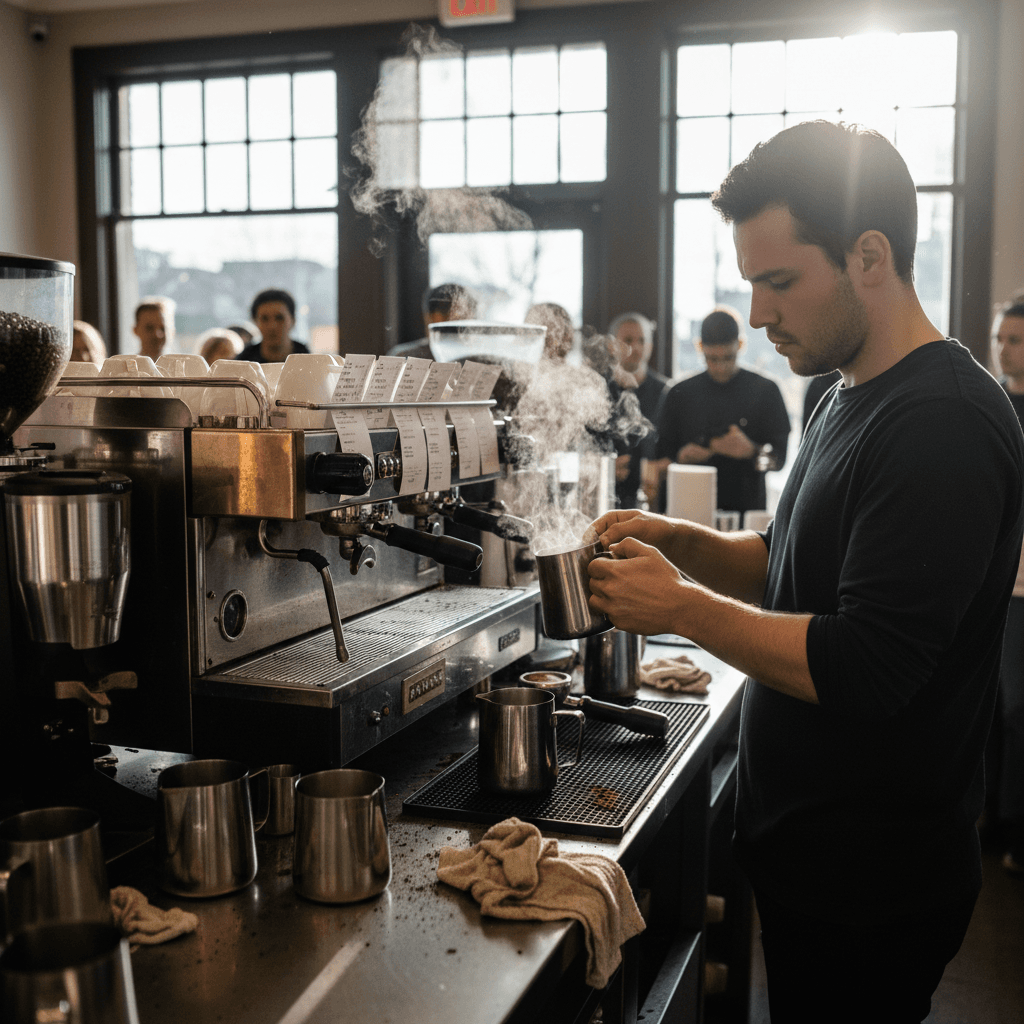
Hard Truth: Your espresso machine should be organized for speed, not Instagram. Most cafes arrange their stations for photos rather than workflow. The correct setup has milk pitchers within arm's reach of the steam wand, portafilters lined up ready to go, and cups stacked by size where you naturally grab them.
Place your most-used syrups closest to where you build drinks. Keep backup beans in a container right under the grinder, not across the bar. Organize your station so you never take more than two steps between pulling a shot and steaming milk.
Watch your barista during a rush. Count how many times they turn their body completely away from the machine to reach for something. Each full turn adds 2-3 seconds and breaks concentration. The ideal station has everything within a 180-degree arc - espresso machine at center, grinder to one side, milk fridge below, cups and syrups on the other side. No reaching behind, no walking around.
The Rule: If a barista has to take more than one step to complete any single drink component, your station is wrong. Test this by having someone make ten consecutive lattes while you count their steps. More than twenty total steps means redesign is needed.
When Muscle Memory Fails During Peak Rush
Even perfect station setup breaks down when three tickets print at once and customers are watching the queue grow. This is when baristas default to chaotic movements - making one drink at a time instead of batching similar tasks. They'll pull one shot, steam one pitcher, assemble one drink, then repeat for the next identical order.
The bottleneck isn't skill - it's mental overload. When faced with multiple complex orders, even experienced baristas forget they can pull two shots while steaming milk for a different drink.
Here's what happens: Ticket one is a latte. Ticket two is another latte. Ticket three is a cappuccino. An untrained barista makes the first latte start to finish before even looking at ticket two. They pull one shot, steam milk for that specific drink, assemble it, then move on. This sequential processing creates massive inefficiency.
During mental overload, baristas revert to safe patterns - complete one task fully before starting another. They don't see that both lattes need steamed milk, which could be done in one larger pitcher. They don't notice all three drinks need espresso shots, which could be pulled back-to-back while milk steams.
Building Speed Without Sacrificing Quality
The solution isn't working faster - it's working smarter. Train your team to read tickets in groups of three before starting any drinks. Look for patterns: two lattes and a cappuccino can share steamed milk timing. Three americanos can have their shots pulled simultaneously.
Create a simple system: read all tickets first, group similar drinks, prep multiple cups at once. This cuts movement by 40% during busy periods. The goal isn't robotic efficiency - it's creating enough mental space to maintain quality while handling volume.
Start with ticket grouping drills during slow periods. Print three sample tickets and have your barista sort them by similarity before making anything. Which drinks use whole milk? Which need extra shots? Which are hot versus iced? This mental sorting becomes automatic with practice.
Next, implement batch preparation. If two lattes need whole milk, steam enough for both in one pitcher. If three drinks need espresso, pull all shots consecutively while the milk steams for something else. This parallel processing turns what was sequential work into overlapping tasks.
Pair this workflow with clear communication between baristas during rush. One person handles espresso shots while another steams milk and assembles drinks. This division of labor lets each person focus on their specialty without switching mental gears constantly.
Measure success by timing how long it takes from ticket printing to drink completion during your busiest hour. Aim to shave 10-15 seconds off each drink through better workflow alone.
The Rule: Never pull fewer than two shots at a time during peak hours if your machine allows it. Never steam milk for just one drink if another identical drink is waiting.
From Manual Systems to Digital Support
These manual workflow improvements work - but they require constant training and supervision. Baristas will revert to old habits under pressure unless systems become automatic through repetition over weeks or months.
This is where modern cafe technology can help lock in good habits by removing mental load from your team. Digital order management systems can group similar drinks automatically on screen displays, showing baristas exactly what to batch together without them having to sort through paper tickets mentally.
Inventory tracking tools can alert you before you run out of oat milk during Saturday rush, preventing those frantic mid-service restocking trips that break workflow rhythm. Scheduling platforms can ensure you have the right number of trained baristas during predictable peaks based on historical sales data rather than guesswork.
The technology doesn't replace good training - it supports it by handling the repetitive pattern recognition and inventory math that distracts from drink quality during busy periods.
Taking the Next Step
These barista workflow adjustments are practical shifts anyone can implement tomorrow morning before service starts. The logic is clear: reduce movement between tasks, batch similar work together, and create systems that survive under pressure.
Start by observing your current workflow during next Saturday's rush with fresh eyes - count the steps between drinks and time those hesitation gaps between orders. Then implement just one change from this guide and measure the difference in service speed during your next peak period.
When you're ready to scale these improvements across all shifts and locations consistently, view our pricing options designed for cafes of different sizes and volumes or start a free trial to see how digital tools can reinforce these manual workflow gains without adding complexity for your team